This product was designed by Sonocotta store.
By buying this product you support original hardware creators.


Drop in replacement for your speaker terminals to make them smart speakers with TAS5805M DAC and built-in DSP
What is it
Louder-ESP32-mini is a compact version of the Louder-ESP32, which would replace the standard speaker terminal on your old speakers, turning them into a hi-fi audio solution for your smart home.
It comes in two sizes that are most common among off-the-shelf speakers: 42x42mm (small speakers typically) and 55x55mm (for larger models).
Louder-ESP32-mini is equipped with a high-quality TAS5805M DAC with powerful DSP features, allowing audio tuning to turn small speakers into high-quality audio streamers.
- Onboard ESP32-S3 with 8MB PSRAM is there to ensure enough horsepower for solid streaming capabilities.
- USB-PD trigger chip on the 55mm version for extra power
- DSP-enabled DAC that allows you to squeeze exactly the sound you want
It is designed to be as affordable as it can be, so more speakers can avoid landfills and be an integral part of smart homes instead. It uses minimal (if any) extra peripherals, and it requires no soldering to operate. The part choice was carefully done to make it production-friendly and affordable for everyone
- TAS5805M DAC with integrated DSP
- Digital volume control (avoids loss of resolution compared to software volume)
- Gain digital control
- Parametric EQ (15xBQ), 128-tap FIR, 3-band DRC, AGL
Use cases
The main use case for the Louder-ESP32-mini is Home Assistant and Music Assistant integration via ESPHome, although it is there to fit your own needs and implement your ideas.
- Multi-Room Audio with Snapclient (Beta) Use Louder-ESP32 as a Snapclient endpoint to create perfectly synchronized multi-room audio systems. Ideal for distributed music playback without proprietary lock-in.
- Standalone Player with Squeezelite-ESP32 (Beta) Run Squeezelite-ESP32 for a self-contained network audio player supporting Spotify Connect, AirPlay, and Logitech Media Server (LMS) — no external computer required.
- Educational Projects & Teaching Platforms
A powerful tool for schools, universities, and technical education. Louder-ESP32 can be used to teach embedded systems, digital audio, networking, and open-source software — ranging from simple audio playback labs to advanced DSP, streaming, and real-time systems projects. - Research, Prototyping & Experimentation
Well-suited for rapid prototyping of audio devices, proofs-of-concept, and research projects involving DSP, low-latency streaming, wireless audio, or human-machine interaction. - A Foundation for Custom Products & DIY Builds
With all firmware and tooling fully open source, Louder-ESP32 is an ideal base for custom audio devices — whether you’re building a personal DIY project, a small production run, or a community-driven product.
Features
| Louder-ESP32-mini 42x42mm |
Louder-ESP32-mini 55x55mm |
Louder-ESP32 | |
|---|---|---|---|
| MCU | ESP32-S3-WROOM-N8R8 | ESP32-S3-WROOM-N8R8 | ESP32-WROVER-N8R8 or ESP32-S3-WROOM-N8R8 |
| DAC | Stereo I2S DAC (TAS5805M) with built in DSP and D-Class amp | Stereo I2S DAC ( TAS5805M ) with built in DSP and D-Class amp |
Stereo I2S DAC (TAS5805M) with built in DSP and D-Class amp |
| Output (2Ω, 1% THD+N) | 1x 5W | 1x 60W | - |
| Output (4Ω, 1% THD+N) | 1x 3W | 1x 45W | 2x 32W |
| Output (8Ω, 1% THD+N) | 1x 2W | 1x 25W | 2x 23W |
| Flash/PSRAM | 8MB/8MB | 8MB/8MB | 8MB/8MB |
| Power | 5V from USB-C | Up to 20V from USB-PD | Up to 26V from external PSU |
| Connectivity | WiFi + BLE | WiFi + BLE | WiFi + BT4.2 (except S3) + BLE Ethernet (optional module) |
| DSP Features | Advanced (EQ, FIR, DRC, AGL, etc.) | Advanced (EQ, FIR, DRC, AGL, etc.) | Advanced (EQ, FIR, DRC, AGL, etc.) |
| Peripheral | |||
| Ethernet | No | No | Optional |
| Microphone | No | No | Optional |
| IR reader | No | No | Optional |
| RGB LED | No | No | Optional |
| Display support | No | OLED No | OLED (128x64px) |
| Software support | |||
| Squeezelite-ESP3 ** | ✅ | ✅ | ✅ |
| Snapclient *** | ✅ | ✅ | ✅ |
| ESPHome (HA) | ✅ | ✅ | ✅ |
| Power options | |||
| USB-C | ✅ | ✅ | ✅ |
| USB-PD | - | ✅ | - |
| External PSU | - | - | ✅ |
⚠️ ** Squeezelite-ESP32 support for the ESP32-S3 is an experimental feature and is not fully stable; for styable operation, 'classic' ESP32 is recommended. Please refer to the original repo for up-to-date support information
⚠️ *** Snapclient support for the ESP32-S3 is in beta and not fully stable as well. For best results, 'classic' ESP32 is recommended.
⚠️ Louder boards will connect to passive speakers; you can't use headphones or an external amp
💡 Need to connect an external amp? Check out HiFi-ESP32 / HiFi-ESP32-Plus and Amped-ESP32 / Amped-ESP32-Plus
💡 Don't need DSP capabilities? Check out Loud-ESP32 / Loud-ESP32-Plus
💡 Looking for a more feature-packed version? Check out Louder Esparagus and Esapragus Audio Brick
Onboard PSRAM
Audio streaming requires proper buffering to work, even with the ESP32's 500K of RAM; it is a challenging task. For that reason, all Louder-ESP32 board versions have an 8 MB PSRAM chip onboard, connected via a high-speed interface.
Board Pinout
DAC interface
| I2S CLK | I2S DATA | I2S WS | I2C SDA | I2C SCL | TAS5805 PWDN | TAS5805 FAULT | |
|---|---|---|---|---|---|---|---|
| ESP32-S3 | 14 | 16 | 15 | 8 | 9 | 17 | 18 |
Software Options
- Home Assistant smart home audio and notifications. Start from the web-installer, as soon as you configure WiFi, the boards will be discovered by the ESPHome add-in automatically. Dedicated configs can be found in the documentation for simple and stable media-player, experimental sendspin protocol, and experimental snapclient component
- Squeezelite-ESP32 Spotify Connect, AirPlay, Bluetooth or Logitech Media Server. Flash directly from your browser using the web-installer. Configure WiFi using Hotspot (default password: squeezelite). Don't forget to exit Recovery mode when done.
- Snapclient multi-room audio streaming with snapserver. Flash directly from your browser using the web-installer, as soon as you configure the WiFi board will discover the snapserver automatically
- Snapclient (edge) - developer version. Developer's version of the snapclient, less stable and more feature-rich for those who cannot wait for new features to be released. Installed via web-installer, similar to standard snapclient
- AirPlay 1 & 2 with full DSP control (coming soon). rbouteiller/airplay-esp32 — an actively developed, open-source AirPlay 1 & 2 firmware installable from your browser via the web-installer — already drives the TAS5805M on the Louder-ESP32 family, including its full 15-band DSP control. A build matching this board's exact pinout is planned.
- Your own software. Use Arduino IDE or Platformio IDE and the provided software samples
⚠️ Both squeezelite-esp32 and snapclient are in beta and not fully stable on the ESP32-S3. The main use case for the Louder-ESP32-mini is Home Assistant and Music Assistant integration via ESPHome, although it is there to fit your own needs and implement your ideas.
Using with Home Assistant
Both Louder-ESP32-mini versions were created specifically to be used with Home Assistant via ESPHome integration. For both boards, rich configs were pre-created with hardware configuration for common use cases. These include
- media_player component for simple and robust media playback and TTS announcements (with ducking effect)
- Sendspin media player – new experimental protocol for multi-room sync with media controls and more
- An experimental snapclient component that allows near-perfect multi-room sync and seamless integration with Music Assistant
- Another snapclient fork with an implemented 15-band software equalizer and a rich set of EQ presets
Configurations are being actively maintained and upgraded, new experimental components added for you to test and enjoy
Flashing ESP32-S3
ESP32-S3 boards have two ways of firmware update: (1) similarly to classic ESP32, they can be flashed over built-in UART, or (2) uniquely for S3, over built-in USB host controller. Since it is firmware-controlled, it may be disabled if not used (or, more commonly, not available with factory default empty firmware). When come unflashed ESP32-S3 device comes into a boot loop, with a USB-CDC device appearing and disappearing every second, and requires a special flashing initialisation sequence to get flashed:
- Press the IO0 (FLASH) button and keep it pressed
- Press and release the RESET button. Release the FLASH button.
- ESP32-S3 will enter download mode, and the USB-CDC device will appear and stay available
- Run flashing routine as usual, either through web-serial or
esp_tool - This time, it is not possible to reboot the device over USB, so press RESET once more
- Device will boot normally into firmware, and if USB-CDC is enabled in the firmware, you will be able to flash it normally, download mode and reset sequence will work over USB.
- If you manage to flash firmware without USB-CDC support, you need to go through the above sequence once more
Hardware
Please visit the hardware section for board schematics and PCB designs. Note that PCBs are shared as multi-layer PDFs.
BTL and PBTL mode (TAS5805M DAC)
TAS5805M DAC Allows 2 modes of operation - BTL (stereo) and PBTL (parallel, or mono). In Mono amp will use a completely different modulation scheme and basically will fully synchronize output drivers. Since Louder-ESP32-mini has only a single output, it is mandatory to use PBTL mode, which is done by setting a few registers in the DAC. The default configuration is BTL, so you need to change it to PBTL for proper operation. This is done in the configuration, and the configuration is stored in the dac_controlset variable in case of squeezelite-esp32: dac_controlset: {"init":[{"reg":3,"val":2},{"reg":3,"val":3},{"reg":2,"val":4}],"poweron":[{"reg":3,"val":3}],"poweroff":[{"reg":3,"val":0}]}
Important point, this will send only one channel to the output, that’s just how the DAC works. True mono as (L+R)/2 is possible via more in-depth configuration that is possible with ESPHome and snapclient, but not with squeezelite-esp32. If you want to use squeezelite-esp32, you need to make sure your source is mono, or you will get only one channel of audio.
TAS5805M DSP capabilities
The TAS5805M DAC has a very powerful DSP, that allows doing lots of data processing on the silicon, that otherwise would take a considerable part of your CPU time. As of the moment of writing it is mostly an undiscovered part of the DAC, since unfortunately, TI is not making it very easy for developers. (A minute of complaint) To be more specific, you need to be (A) a proven hardware manufacturer to get access to the configuration software, namely PurePath. (B) you need to apply for a personal license and go through an approval process, and after a few weeks of waiting you get access to one DAC configuration you asked for. (C) You find out that it will work with TI's own evaluation board that will set you back $250 if you'd be able to find one. Otherwise, all you have is a list of I2C commands that you need to transfer to the device on your own cost. No wonder no one knows how to use it.
But moanings aside, what do you get after:
- Flexible input mixer with gain corrections
- 15 EQ with numerous filter configurations
- 3-band Dynamic Range Compression with flexible curve configuration
- 128-tap FIR filter
- Automatic Gain Limiter with flexible configuration
- Soft clipper
- and a few other things
At this moment I'm adding most useful features one by one, focusing on EQ and Bi-amp filtering capabilities. All of the above are available right now for experimentation. I'm keen to hear your feedback while I'm moving forward with porting this to other software options
- [X] - Bare I2S TAS5805M library
- [X] - espragus-snapclient software with self-hosted UI
- [X] - ESPHome component with on-the-fly configuration changes
- [ ] - squeezelite-esp32
Speakers compatibility
Most of the speakers with 42mm or 55mm square terminals would work without any mechanical work needed. Smaller terminals can be extended for Louder-ESP32-mini use with basic mechanical work.
| A | B | C |
|---|---|---|
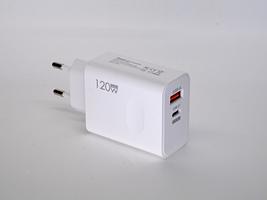
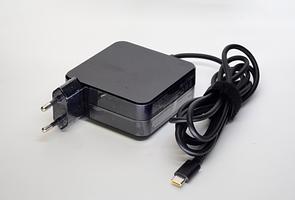
The main benefit of the 55mm model is an onboard USB PD-trigger chip that allows use with 65W USB-C power adapters. Compared to the 5W limit of the 42mm model, this gives a healthy power headroom when used with larger speakers.
Louder-ESP32 Mini shell
Since the Louder-ESP32 Mini is designed to fit a standard speaker terminal, a vertical USB-C port was added instead of the more traditional horizontal type. It is highly recommended to protect it from the sideways force, which would be common when the cable is inserted. The simplest solution is to use a 3D-printed shell that will protect the board and the USB-C port from mechanical stress.
| 42mm model | 55mm model |
|---|---|
You can pull it from the folder or pull directly from the Tinkercad and modify if needed. The shell is designed to be printed without support, and it is perfectly okay to print it with PLA plastic or similar material.
Louder-ESP32 Mini USB-PD note
While the 55mm variant has a Hynetek HUSB238A USB-PD trigger chip, capable of pulling more power from the PD-enabled power adapters (most commonly modern laptop power adapters), there are certain limitations to the way it can be used.
The chip allows two modes of operation: (a) "Dumb" GPIO mode, where voltage is requested via pin configuration and no code is needed; it will work right from the start; and (b) "Smart" mode, where voltage /curent is requested via I2C and reported back to the host.
The default mode of operation of the Louder-ESP32-Mini (55mm) is "Smart" mode, which requires an I2C driver that actively sets the required voltage on start. Note that the HUSB238A is a different part from the plain HUSB238 targeted by ESPHome's upstream husb238 component (PR6693/PR16572) — it has a much larger register map and gates every command behind an ENABLE bit the plain chip doesn't have, so that component silently no-ops on this board. A dedicated esphome-husb238a external component was built for the actual chip and is wired into the 55mm board's firmware configs — still a work in progress, but usable today.
However, it is fairly easy to change the mode of operation to GPIO, so it would always require maximum available power from the power adapter. For this, you need to do two changes:
- Cut the I2C line from the MCU - it will set voltage and current to the maximum available
- Remove 1M resistor marked with (*) - it will force GPIO mode
If you decide to go with the change, since your software can't trigger higher voltage, I advise not to remove the resistor completely, but disconnect it on one end - this way you can go back to "Smart" mode later on.
Restocking & Availability
New restock batches are regularly ordered from the factory, and I plan to keep all versions available at least until the next board revision is released. For current availability, you can also check the official reseller Elecrow.
USA shipping Update
Due to the new tariffs introduced by the Trump administration, standard shipments are temporarily on hold. However, shipping to the US has now resumed via UPS, though rates are currently quite high. I’ll fully resume regular shipping as soon as the restrictions are lifted. In the meantime, you may consider ordering through Elecrow.
Sponsorship & Community Support
If you’re working on an open-source project, an educational initiative, or any pro-bono/volunteer effort, feel free to reach out for sponsorship details. I’ll do my best to provide discounts or even free boards.
Custom Design & Consultation
If you’re interested in a custom design based on or inspired by my boards, I also offer contract design work and consultation when needed.
Links to code and documentation
Shipping policy
Most orders are shipped the next business day morning. All shipments are tracked. Delivery time in the EU is 3-7 days, outside 2-3 weeks, depending on the distance. After 30 days, the package is considered lost - reach out for a refund or replacement.
Here are some extras that might be useful for your project!
In demand. 2 people bought this in the last 24 hours.
Louder ESP32 Mini
Sold by Sonocotta store
$15.00
No tax for United States [change]
Stock available: 16
Volume discount | |
2+ items | $14.40 |
5+ items | $13.80 |
10+ items | $12.75 |
The seller

Smart Home and DIY Electronics